


Separate FLSA premium
If a statement separately reports the FLSA overtime premium, use that amount as the starting estimate.
Enter your pay-record figures to estimate the FLSA overtime premium portion before deduction caps, phase-outs, and taxpayer-specific limitations.
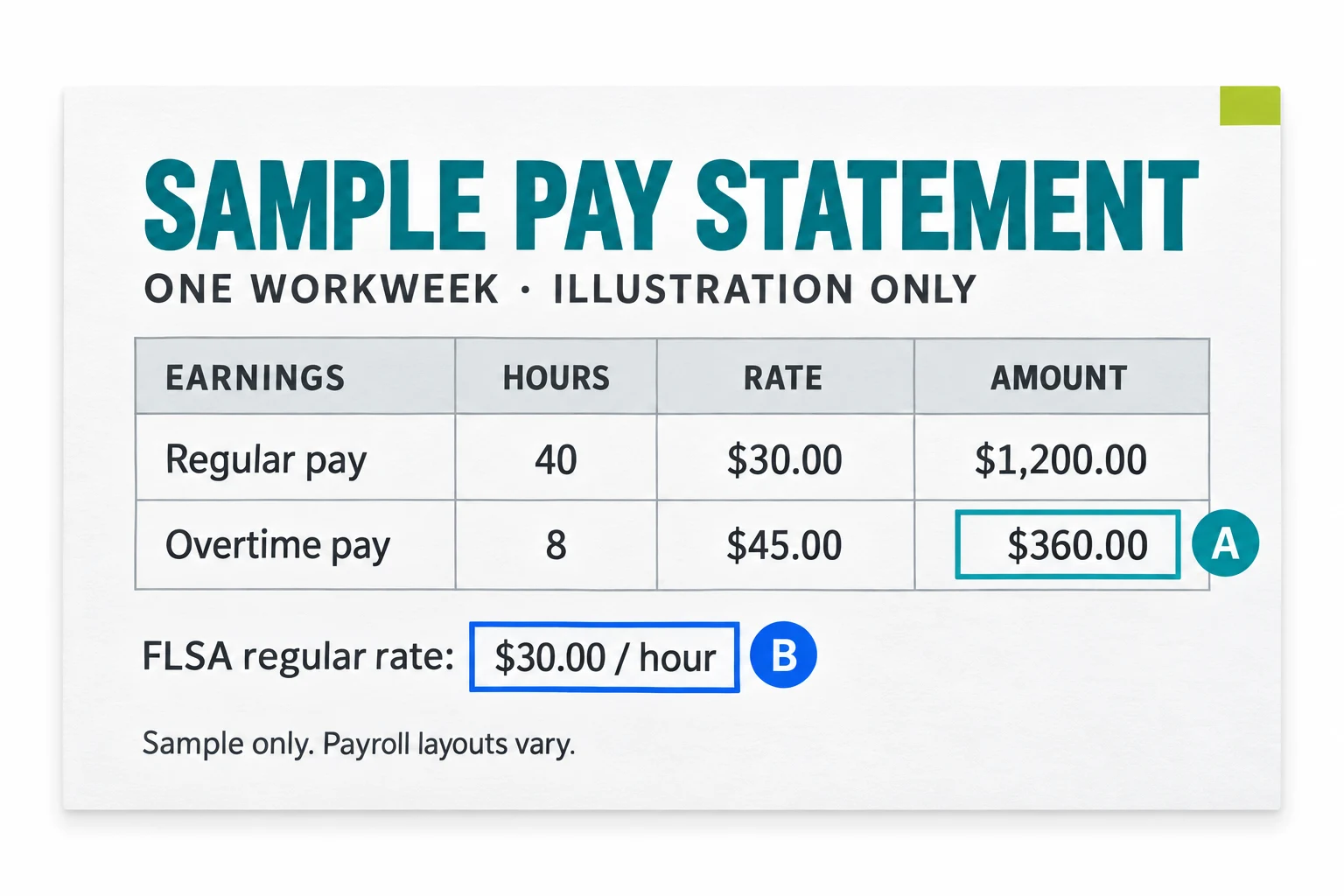
A STANDARD TIME-AND-A-HALF EXAMPLE
At a $30 regular rate, 8 overtime hours pay $360. Of that, $240 is the regular-rate portion and $120 is the half-time premium.
$30.00 × 0.5 × 8 hours = $120.00
Assumes FLSA-covered, nonexempt overtime in one workweek. Personal limits and reporting rules still apply.
The calculator form is intentionally explicit so the result can be reviewed later by a preparer, payroll team, or HR contact.
If a statement separately reports the FLSA overtime premium, use that amount as the starting estimate.
If the statement combines regular wages for overtime hours with the half-time premium, the educational estimate uses one third of that aggregate overtime amount.
If overtime was paid above time-and-a-half, the estimate should isolate only the FLSA-required half-time premium portion.
If no annual statement is available, estimate from regular rate and overtime hours, then keep notes showing why that method was used.
The result is an estimated qualified overtime compensation amount before personal limitations. It is not the final deduction amount for a return.
The display also shows the filing-status cap and a MAGI warning when the optional range suggests the IRS phase-out may apply.
Official sources
Source baseline checked 2026-09-08
Defines qualified overtime compensation, FLSA overtime eligibility, deduction limits, reporting rules, and taxpayer requirements.
View official sourceSummarizes the deduction cap, MAGI phase-out thresholds, Social Security number rule, and 2025 reporting note.
View official sourceProvides 2025 methods for individuals estimating qualified overtime compensation when separate reporting is not available.
View official sourceExplains 2026 Form W-2 reporting, including Box 12 code TT for qualified overtime compensation.
View official sourceExplains the FLSA overtime baseline for covered, nonexempt employees working over 40 hours in a workweek.
View official source